
Ford Bet on AI for Quality - Then Quietly Rehired 350 Veterans
Ford leaned on AI to guarantee quality. It did not work - and the fix it reached for says a lot about where automation actually breaks.
Founder & Lead Technician
Quick answer
Ford rehired 350 veteran engineers after automated AI quality systems delivered disappointing results. The specialists hunt for failure points before parts reach the plant floor, train younger staff, and reprogram AI tools - moves Ford expects to cut costs by 1 billion dollars this year.
Ford just made a very expensive admission about AI. It rehired the humans.
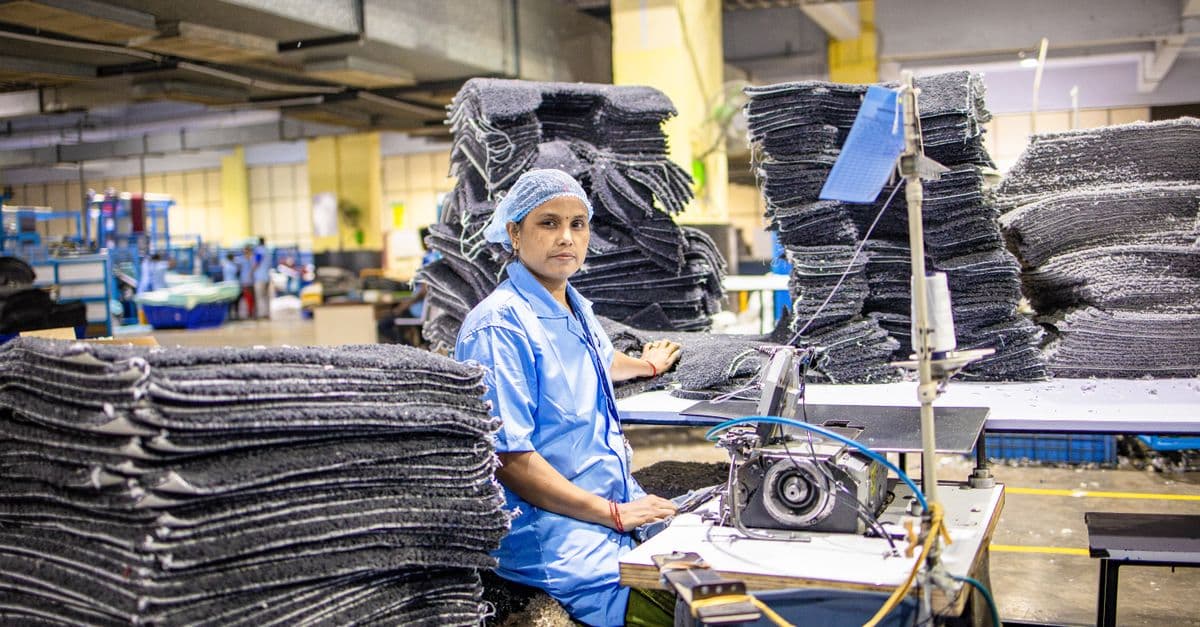
The automaker brought back 350 veteran engineers - many of them former employees, others poached from suppliers - after its automated, AI-driven quality systems failed to deliver the cars Ford wanted to ship. Inside the company these specialists have a nickname: the gray beards. And right now they are the people Ford is trusting to catch what the algorithms missed.
Here is the line that should stop anyone betting big on automation. Charles Poon, Ford vice president of vehicle hardware engineering, put it bluntly: the company mistakenly thought that by just introducing artificial intelligence and feeding it the design requirements, that alone would produce a high-quality product.
It did not. And how Ford figured that out is the part worth your attention.
What Ford actually got wrong
According to a Bloomberg report, Ford chief operating officer Kumar Galhotra told journalists the company had been relying more and more on automated quality systems - with disappointing results. The fix was not a better model or a bigger dataset. It was experience.
The rehired specialists do something deceptively simple: they hunt for failure points before a part ever reaches the plant floor. That is the work the AI was supposed to absorb. Feed the system the design requirements, the thinking went, and it would flag the weak spots on its own.
The problem is that catching failures before they happen is not really a data problem. It is a judgment problem. A 25-year veteran who has watched a specific bracket crack under a specific load in a specific climate carries knowledge that was never written into a design requirement. The AI never ingested it because nobody ever wrote it down.
That gap - between documented requirements and lived expertise - is exactly where Ford quality slipped.
Why this keeps happening to AI rollouts
Ford is not an outlier. It is a preview.
The seductive pitch behind enterprise AI is that you can encode an expert into a system and then scale that expert infinitely. Ingest the manuals, the specs, the historical data, and the model becomes your best engineer - available everywhere, all at once, for free. It is a genuinely powerful idea, and in narrow, well-documented tasks it works.
But quality assurance is not a narrow, well-documented task. So much of it lives as tacit knowledge - the intuition that says this weld looks fine on paper but will fail in the field. You cannot ingest what was never recorded. When you remove the humans who carry that intuition and replace them with a system trained only on what got written down, you do not get their judgment. You get the gaps in your documentation, faithfully automated at scale.
That is the trap. AI does not just inherit your knowledge. It inherits your blind spots - and then it applies them to every part on the line.
Treat any AI system that replaces experienced human judgment as unproven until it has been pressure-tested against the people it replaced. If you cannot explain what the experts knew that the model does not, you have not automated their expertise - you have deleted it.
The smart part: Ford did not pick a side
Here is what makes this more than an anti-AI story. Ford is not ripping out its AI and going back to clipboards.
Instead, the gray beard engineers have two jobs beyond catching defects. They train younger staff, transferring decades of hard-won instinct to the next generation. And - this is the clever move - they reprogram the AI tools themselves.
In other words, the veterans are now teaching the machines. The expertise that was missing from the training data is being fed back in by the people who actually hold it. The end state Ford is aiming for is not human versus AI. It is human-guided AI, where seasoned engineers steer the automation instead of being replaced by it.
And the early numbers suggest it is working.
What it is worth to Ford
The financial case is not subtle. Ford expects the rehiring effort to contribute to roughly 1 billion dollars in reduced costs this year. Catching defects before they reach the plant floor - rather than after a recall, a warranty claim, or a damaged reputation - is where that money lives.
There is a reputation payoff too. Ford claimed the top spot among mainstream brands in the JD Power Initial Quality Survey released this week. For a company that publicly admitted its automation had been letting quality slip, climbing to number one is a pointed result.
| Approach | What Ford found |
|---|---|
| AI-only quality systems | Disappointing results; quality fell short of targets |
| Rehired veteran engineers | Catch failure points before the plant floor |
| Veterans plus AI combined | Top JD Power rank; about 1 billion dollars in expected savings |
What happens next - and what it means for you
Over the next few months, watch whether Ford keeps the JD Power crown into its next model cycle. If the gains hold, expect other automakers - and frankly other industries that quietly thinned their senior ranks during the AI hiring freeze - to start rehiring the experience they let go.
If you run or work inside any operation deploying AI to replace expert judgment, take the Ford lesson now rather than after a billion-dollar miss. Ask three questions before you trust the system: What did your experts know that never made it into the documentation? How will you catch the failures the model cannot see? And who is checking the AI when it is confidently wrong?
Ford learned the answer the hard way. The fastest path to quality was not removing the humans. It was putting them back in charge - and letting the AI learn from them.
Source: TechCrunch
Frequently asked questions
Why did Ford rehire veteran engineers after using AI?+
Ford had leaned more and more on automated quality systems, but executives said the results were disappointing. AI ingested the company design requirements but did not reliably produce a high-quality product. So Ford brought back 350 experienced specialists - many former employees - to catch failure points before parts reach the plant floor and to retrain its AI tools.
Is Ford abandoning artificial intelligence?+
No. Ford is not scrapping AI. It is using the rehired gray beard engineers to train younger staff and to reprogram its AI quality tools. The goal is a human-plus-AI workflow where seasoned judgment guides the automation, rather than expecting AI to deliver quality on its own.
Did the rehiring actually improve Ford quality?+
Ford says yes. The automaker expects the move to contribute to roughly 1 billion dollars in reduced costs this year, and it took the top spot among mainstream brands in the latest JD Power Initial Quality Survey - a signal that human review plus AI is outperforming automation alone.
Founder & Lead Technician
Daniel founded Ask Technicians to cut through bad tech advice. He writes hands-on troubleshooting guides drawn from years of real-world repair and support work.
Related guides

AI Was Supposed to Kill Junior Jobs. New Data Says Otherwise
The companies spending the most on AI just did the one thing everyone swore they would not: hire more entry-level workers. But there is a catch.

Claude Cowork Is Going Mobile - and It Runs While Your Phone Is Closed
Anthropic is quietly testing a way to start a Claude task on your phone, lock it, and walk away while it keeps working. Here is what the leaked screens reveal.

Founder Fed His Cancer Data Into Claude to Fight Back
A 35-year-old founder poured his bloodwork, scans, wearable data and journal into Claude during six months of chemo. Here is what he did and why it is trending.
Asian AI Labs Launch Models as Anthropic Ban Drags On
Sakana AI and China's 360 unveiled frontier models pitched as export-ban-proof alternatives to Anthropic's Mythos and Fable 5. Here is what shipped and why it matters.