
Nvidia Cuts Data Center Water Use: The Catch
Nvidia says its new warm-water cooling system can eliminate on-site data center water use. But the savings stop at the facility walls, and the bigger water problem stays.
Founder & Lead Technician
Quick answer
Nvidia unveiled a warm-water cooling system that recirculates coolant in a closed loop, claiming up to 100% reduction in on-site data center water use. But power generation and chip manufacturing, counted outside the facility, still drive most of AI's true water footprint.
Nvidia just declared the data center water problem solved. The numbers say otherwise.
Nvidia announced a new warm-water cooling system it says can dramatically cut, and in favorable climates eliminate, the water a data center uses to cool its chips. The reason this is trending: Josh Parker, Nvidia's chief sustainability officer, told Axios that the water consumption challenge for data centers is largely solved. That is a big claim, and it only holds if you look at one carefully drawn box.
The catch is in how Nvidia measures. The company essentially draws a line around the data center. Anything inside the walls gets counted. Anything outside it gets ignored. Inside that box, the system genuinely delivers. Outside it, AI's real water bill is still climbing.
How the warm-water cooling actually works
The engineering here is clever, and worth understanding because it is the part Nvidia gets right.
The system pumps coolant into the server racks at 45 degrees Celsius, about 113 Fahrenheit. That is hot for a human hand but cool enough for a computer chip. The coolant flows through the servers, absorbs heat, and comes out the other side at 55 degrees Celsius, around 131 Fahrenheit, carrying a significant amount of heat away from the hardware.
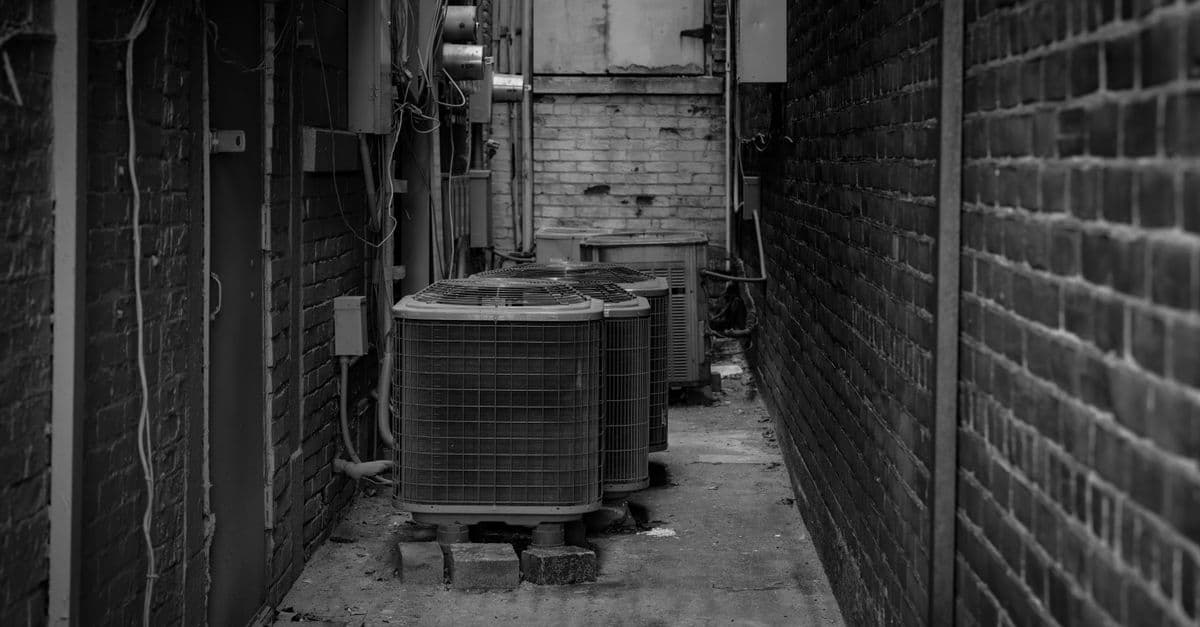
Here is the trick that saves the water. At 55 degrees, the coolant is hot enough that ordinary outside air in most climates can pull the heat off passive radiators. No evaporative cooling. In some cases, no fans at all.
That matters because traditional data center cooling burns water by evaporating it to shed heat. A closed-loop system filled once and recirculated for the life of the facility consumes no new water to cool the chips. In the right climate, Nvidia says, that is a 100 percent reduction in on-site water use. As a bonus, a data center without chillers or fans is also more efficient and a lot quieter.
On its own facility-level promise, the system appears to do exactly what Nvidia says.
Where the rest of AI's water actually goes
No data center runs without electricity, and that is where the box Nvidia drew starts to leak.
Water use outside the facility, mostly in electricity generation and chip manufacturing, can double or triple the total water footprint of a data center. By that math, Nvidia's cooling breakthrough addresses only about a quarter to a third of an AI data center's total water consumption.
Fossil fuel power plants are among the largest water users in the United States, consuming about 2.7 billion gallons per day according to the U.S. Geological Survey, most of it for evaporative cooling of the plants themselves. The per-unit numbers tell the same story.
| Power source | Water used per kilowatt-hour | Share of data center power |
|---|---|---|
| Coal | 2.2 liters | Part of the fossil mix |
| Natural gas | 1.17 liters | Part of the fossil mix |
| Hydropower (reservoir evaporation) | 6.8 liters | About 10 percent |
| Wind | About 0.01 liters | Growing |
| Solar | About 0.03 liters | Growing |
Fossil fuel plants collectively generate about half of all data center power today, according to the IEA. Hydropower supplies around 10 percent, and while a dam does not consume water the way a cooling tower does, evaporation from its reservoir works out to roughly 6.8 liters lost per kilowatt-hour generated. Geothermal varies widely depending on the technology, and some enhanced geothermal startups like Fervo have pledged to use mostly degraded water that would otherwise go unused.
Wind and solar are the outliers in the right direction, sipping vanishingly small amounts of water even after you count manufacturing and panel cleaning.
As long as AI data centers run on fossil fuels, the water savings stop at the data center's walls. The cooling can be perfect and the total footprint can still rise.
Why the fuel choice decides everything
This is the uncomfortable part of the story, and it is a choice tech companies are increasingly making rather than a constraint forced on them.
The water intensity of an AI data center is set less by its plumbing than by what is burning to power it. Run the same facility on natural gas and you carry a 1.17 liter per kilowatt-hour penalty into every query. Run it on coal and that climbs to 2.2. Run it on wind and the number nearly disappears.
So a data center can hit Nvidia's headline 100 percent on-site reduction and still be one of the thirstiest machines in the region, because the water is being spent at the power plant feeding it rather than in the racks themselves. The footprint did not vanish. It moved to a place Nvidia's accounting does not count.
What happens next over the coming 24 to 72 hours
Expect the framing fight to dominate the immediate response. TechCrunch has already asked Nvidia to clarify how it measures water use and said it will update if Nvidia replies, so watch for that statement. The likely sticking point is the boundary: facility-level versus full-lifecycle water accounting.
- Watch for Nvidia's clarification on whether its claim is strictly on-site or meant to imply a broader solution. The wording matters a lot here.
- Expect sustainability researchers and reporters to push back on the largely solved language, pointing to the power-generation share of the footprint.
- Watch the energy angle, because the IEA projects natural gas and coal will supply more than 40 percent of the new electricity needed to meet data center demand through 2030. That trajectory, not the cooling hardware, is what decides AI's water future.
The technology is real and the on-site savings are real. The marketing line that the problem is solved is the part that does not survive contact with the power grid.
The bottom line for anyone tracking AI's footprint
Nvidia built a genuinely better way to cool chips without evaporating water, and in the right climate it can zero out the water used inside the building. That is a meaningful win and it should be adopted widely.
It is just not the same thing as fixing AI's water problem. Most of the water is spent generating the electricity, and that bill only shrinks when the power behind the racks shifts from fossil fuels to wind and solar. Until the grid changes, AI's thirst is decided upstream of anything Nvidia ships.
Source: TechCrunch
Frequently asked questions
Does Nvidia's cooling system really eliminate data center water use?+
It can eliminate water used inside the data center to cool chips, because the coolant runs in a closed loop filled once and recirculated. Nvidia claims up to a 100 percent reduction in on-site water use in favorable climates. It does not touch water used to generate the electricity that powers the facility.
Why does AI still have a water problem if cooling is solved?+
Because most of AI's water footprint sits outside the data center walls, primarily in fossil fuel power generation and chip manufacturing. Those uses can double or triple the total water footprint, so on-site cooling is only about a quarter to a third of the picture.
How much water do power plants use for electricity?+
Natural gas plants use about 1.17 liters of water per kilowatt-hour and coal plants about 2.2 liters, mostly for evaporative cooling. Fossil fuel plants in the U.S. consume roughly 2.7 billion gallons of water per day, according to the U.S. Geological Survey.
Founder & Lead Technician
Daniel founded Ask Technicians to cut through bad tech advice. He writes hands-on troubleshooting guides drawn from years of real-world repair and support work.
Related guides

AI Was Supposed to Kill Junior Jobs. New Data Says Otherwise
The companies spending the most on AI just did the one thing everyone swore they would not: hire more entry-level workers. But there is a catch.

Founder Fed His Cancer Data Into Claude to Fight Back
A 35-year-old founder poured his bloodwork, scans, wearable data and journal into Claude during six months of chemo. Here is what he did and why it is trending.

Corgi Denies Copying Papermark: What We Know
YC-backed Corgi denies stealing Papermark's open source data room software, blaming vibe-coded features it has already changed.

OpenAI Builds Jalapeno Chip to Loosen Nvidia Grip
OpenAI just revealed Jalapeno, a custom inference chip built with Broadcom, joining Google, Apple and SpaceX in racing to escape single-supplier dependence on Nvidia.